Neuigkeiten • June 7, 2026
Was ist KI-Vermittlungssoftware? Der vollständige Leitfaden (2026)
KI-Vermittlungssoftware verbindet Menschen basierend auf Kompatibilitätsdaten – nicht auf Vermutungen. Erfahren Sie, wie es funktioniert, wer es benötigt und welche Ergebnisse Organisationen erzielen.
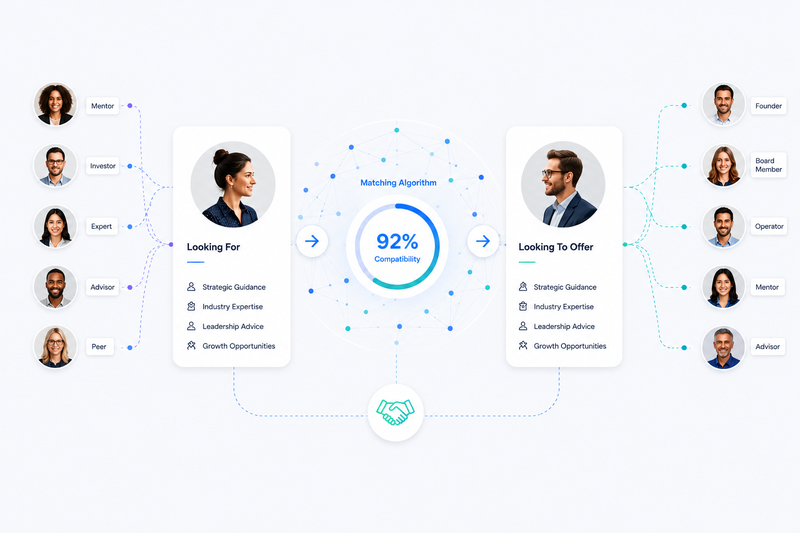
Von Kair Mourtazov, SmartMatchApp Produktspezialist
Lesezeit: 9 Minuten
TL;DR
AI-Vermittlungssoftware ist eine speziell entwickelte Plattform, die Menschen basierend auf strukturierten Kompatibilitätsdaten — Interessen, Ziele, Fachwissen und Verhaltensmuster — verbindet, anstatt auf manuelle Überprüfung oder generische Verzeichnisse zu setzen. Im Gegensatz zu CRM-Tools oder Community-Plattformen berechnet sie Kompatibilitätswerte, automatisiert Einführungen und lernt im Laufe der Zeit aus Feedback zu Ergebnissen. Sie wird von Partnervermittlungsagenturen, Berufsverbänden, Mentoring-Programmen, Investornetzwerken, Veranstaltern und Peer-Support-Communities genutzt und bildet die Infrastrukturschicht für jede Organisation, deren Kernwert davon abhängt, zur richtigen Zeit die richtige Einführung zu machen.
Inhaltsverzeichnis
- Einführung: Das Verbindungsproblem, über das niemand spricht
- Was ist AI-Vermittlungssoftware?
- Wie funktioniert AI-Vermittlungssoftware? (Schritt-für-Schritt)
- Wer sollte AI-Vermittlungssoftware nutzen?
- Schlüsselindustrien, die Vermittlungssoftware nutzen — und was die Forschung sagt
- Vorteile von AI-Vermittlungssoftware
- Ergebnisse aus der Praxis
1. Einführung: Das Verbindungsproblem, über das niemand spricht
Die meisten Organisationen, die Menschen verbinden, haben dasselbe versteckte Nadelöhr: Ihre Daten sind reicher als ihr Prozess.
Sie haben Hunderte oder Tausende von Mitgliederprofilen. Sie wissen, wer ihre Mitglieder sind, was sie brauchen, worin sie gut sind und welche Art von Verbindung ihnen wirklich weiterhelfen würde. Aber ihre Werkzeuge — Tabellenkalkulationen, CRMs, Community-Plattformen — wurden entwickelt, um diese Informationen zu speichern, nicht um darauf zu reagieren.
So erfolgen Einführungen manuell, langsam und inkonsistent. Je mehr Mitglieder eine Organisation hat, desto größer ist die Kluft zwischen den Daten, die sie besitzt, und dem Wert, den sie tatsächlich liefert.
Dies ist kein Kapazitätsproblem. Es ist ein Werkzeugproblem — und genau dieses Problem soll AI-Vermittlungssoftware lösen.
Die Einsätze sind messbar. Der 2026 Membership Performance Benchmark Report von iMIS — basierend auf mehr als 400 Verbands- und Mitgliedschaftsprofis aus sieben Regionen — ergab, dass die Steigerung des Mitgliederengagements das vierte Jahr in Folge das oberste Organisationsziel war. Nur 38% erreichten es. Der häufigste Grund für Nichtverlängerung ist ein Mangel an wahrgenommenem Wert. Der schnellste Weg zu wahrgenommenem Wert ist eine bedeutungsvolle, relevante Verbindung.
2. Was ist AI-Vermittlungssoftware?
AI-Vermittlungssoftware ist eine spezialisierte Vermittlungsplattform, die Menschen basierend auf strukturierten Kompatibilitätskriterien — Interessen, Ziele, Fachwissen, Präferenzen, Demografie und Verhaltensmuster — verbindet. Sie ist speziell für ein einziges Ergebnis gebaut: die richtige Einführung, zwischen den richtigen Personen, zur richtigen Zeit.
Vier Fähigkeiten definieren sie — und unterscheiden sie von jedem anderen Tool auf dem Markt:
- Aktivierung strukturierter Daten — Mitgliederprofile werden zu matchbaren Datenpunkten über benutzerdefinierte Felder, Tags, Präferenzen und Ziele, anstatt passive Aufzeichnungen zu bleiben.
- Kompatibilitätsbewertung — Algorithmen bewerten potenzielle Verbindungen danach, wie gut ihre Profile über mehrere gewichtete Dimensionen hinweg übereinstimmen.
- Automatisierte Einführungen — Ein-Klick-Vorlagen, geplante Nachfassaktionen und integrierte Terminplanung ersetzen stundenlange manuelle Koordination.
- Feedback-Lernen — Ergebnisdaten aus jeder Einführung verfeinern zukünftige Matches und machen das System mit jedem Zyklus genauer.
Generische Tools wie HubSpot, Salesforce, Circle und Mighty Networks speichern Mitgliedsdaten. AI-Vermittlungssoftware aktiviert sie. Diese Unterscheidung — Speicherung vs. Aktivierung — ist der gesamte Unterschied.
AI-Vermittlungsplattform vs. Generisches CRM: Die Fähigkeitslücke
| Fähigkeit | Generisches CRM / Community-Plattform | AI-Vermittlungssoftware |
|---|---|---|
| Mitgliederprofile speichern | ✅ | ✅ |
| Mitglieder suchen und filtern | ✅ Einfach | ✅ Fortgeschritten, mehrfeldrig |
| Kompatibilitätswerte berechnen | ❌ | ✅ |
| Matches nach Relevanz bewerten | ❌ | ✅ |
| AI-Match-Zusammenfassungen generieren | ❌ | ✅ |
| Personalisierte Einführungen automatisieren | ❌ | ✅ |
| Aus Einführungsergebnissen lernen | ❌ | ✅ |
| Speziell für Verbindungs-Workflows entwickelt | ❌ | ✅ |
3. Wie funktioniert AI-Vermittlungssoftware? (Schritt-für-Schritt)
Ein praktischer Überblick darüber, wie moderne AI-Vermittlung funktioniert — und eine Schritt-für-Schritt-Implementierungs-Roadmap für Partnervermittlungsagenturen, Mentoring-Programme und Business-Netzwerkorganisationen.

Schritt 1: Strukturierte Datenerfassung
Jedes Match beginnt mit einem Profil, das für das Matching und nicht nur für die Speicherung erstellt wurde. Vermittlungsplattformen ermöglichen es Organisationen, unbegrenzte benutzerdefinierte Felder zu definieren, die auf ihre spezifischen Kriterien zugeschnitten sind: strukturierte Dropdowns, Mehrfachauswahl-Tags, Freitext, Schlüsselwörter und hierarchische Kategorien.
Eine Partnervermittlungsagentur erfasst Beziehungsziele, Lebensstilwerte und Persönlichkeitsmerkmale. Ein Berufsverband erfasst Branchenexpertise, Geschäftsziele und Kooperationspräferenzen. Ein Investornetzwerk erfasst Übereinstimmung der Anlagethese, Präferenz für die Phase und Sektorfokus. Ein Mentoring-Programm erfasst Karrierestufe, Fähigkeiten und Lernziele.
Jeder Datenpunkt wird sofort durchsuchbar und algorithmisch matchbar. Die Datenbank hört auf, ein statisches Verzeichnis zu sein, und wird zu einer dynamischen Matching-Engine.
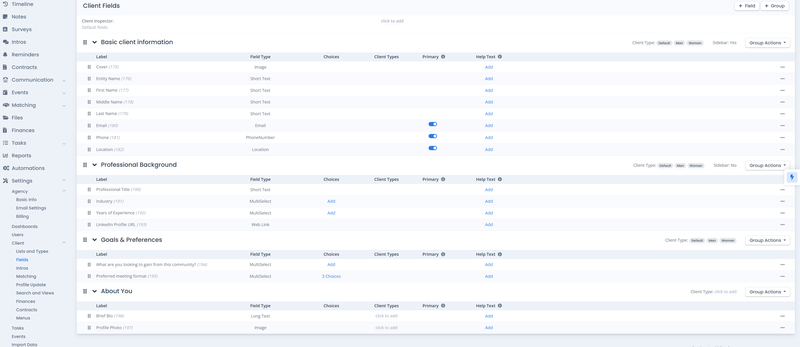
Ein SmartMatchApp Client Fields Panel, das zeigt, wie Mitgliederprofile in matchbare Kategorien strukturiert sind — Grundinformationen, Beruflicher Hintergrund, Ziele & Präferenzen — mit jedem Feldtyp und jeder Kundensegmentierung vollständig konfigurierbar nach den Matching-Kriterien Ihrer Organisation
🡲 Vertiefung: Wie man eine Vermittlungsdatenbank einrichtet: Felder, Kundentypen, Listen & Erweiterte Suche
Schritt 2: Kompatibilitätsbewertung und AI-Match-Zusammenfassungen
Sobald Profile ausgefüllt sind, berechnet der Matching-Algorithmus einen Kompatibilitätswert basierend auf den Kriterien, die die Organisation als am relevantesten definiert — geografische Nähe, gemeinsame Interessen, komplementäre Fähigkeiten, Übereinstimmung der Anlagethese oder eine beliebige gewichtete Kombination. Kandidaten werden nach Kompatibilität bewertet, wobei die stärksten Verbindungen zuerst angezeigt werden, anstatt eine flache Liste zurückzugeben.
Moderne Plattformen wie SmartMatchApp fügen AI-Match-Zusammenfassungen hinzu — natürliche Sprachbeschreibungen, warum zwei Personen kompatibel sind — und geben Vermittlern den Kontext, um sicher zu handeln, ohne jedes Profil von Grund auf neu lesen zu müssen.
Bemerkenswert ist, dass dieses Mensch-in-der-Schleife-Modell das ist, was die Forschung unterstützt: Eine 2025-Studie mit 800 Teilnehmern ergab, dass menschlich-AI-kollaboratives Matching sowohl menschliches als auch rein algorithmisches Matching übertrifft — genau das Modell, auf dem professionelle Vermittlungsplattformen basieren.
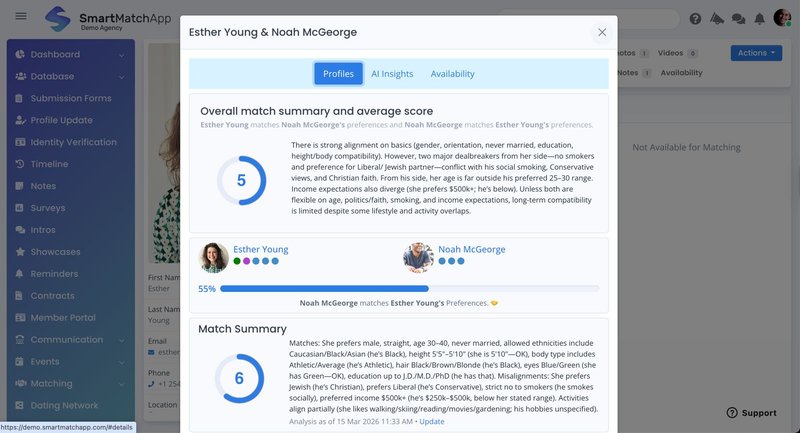
Ein AI Insights Panel, das eine Gesamt-Match-Punktzahl, eine natürliche Sprach-Kompatibilitätsanalyse, die sowohl Übereinstimmungen als auch Ausschlusskriterien identifiziert, und individuelle Präferenzwerte zeigt — und Vermittlern das vollständige Bild gibt, bevor sie eine Einführung machen. Mit freundlicher Genehmigung von SmartMatchApp
🡲 Vertiefung: Wie man AI-Matching-Kriterien in Ihrer Community-Vermittlungsplattform einrichtet
Schritt 3: Automatisierte Einführungen
Hier findet das Engagement statt — und hier stoßen manuelle Systeme zuerst an ihre Grenzen.
AI-Vermittlungsplattformen ermöglichen Ein-Klick-Einführungsvorlagen, automatisierte Nachfasssequenzen, integrierte Kalenderplanung und Sammlung von Feedback nach dem Meeting. Ein Vermittler oder Community-Manager überprüft bewertete Vorschläge, wählt ein Paar aus und sendet eine vollständig personalisierte Einführung mit einem einzigen Klick. Alles danach wird automatisch gehandhabt.
Organisationen, die diese Funktionen nutzen, berichten von einer Einsparung von durchschnittlich 50+ Stunden pro Woche bei administrativen Aufgaben, mit messbaren Produktivitätsgewinnen unmittelbar nach der Implementierung.
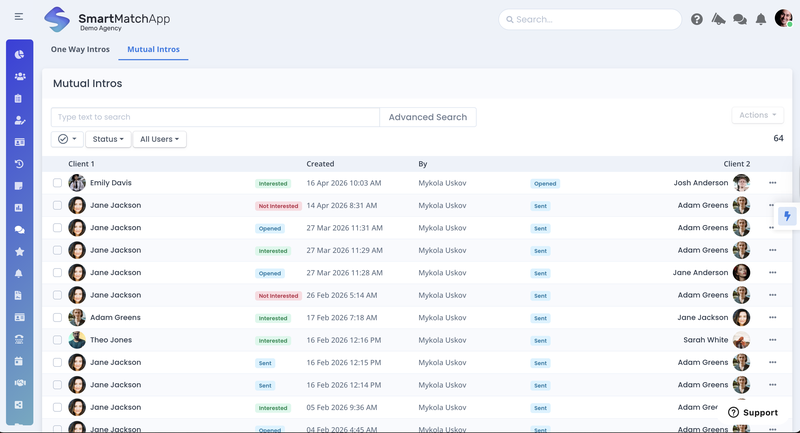
Ein Mutual Intros Dashboard, das 64 aktive Einführungen in Echtzeit verfolgt — jede mit Statusaktualisierungen, zugewiesenem Teammitglied, Zeitstempel und beiden übereinstimmenden Profilen auf einen Blick sichtbar. Mit freundlicher Genehmigung von SmartMatchApp
🡲 Vertiefung: Wie man Einführungen, Voreinstellungen & Match-Automatisierung in Ihrer Vermittlungssoftware meistert
Schritt 4: Workflow-Automatisierung
Erweiterte Vermittlungsplattformen erweitern die Automatisierung über den gesamten Mitgliederlebenszyklus. Auslöser können konfiguriert werden, um:
- Neue Mitglieder sofort bei der Anmeldung willkommen zu heißen
- Mitglieder automatisch Teamvertretern zuzuweisen
- Erinnerungen an Meetings vor geplanten Anrufen zu senden
- Inaktive Mitglieder, die innerhalb eines festgelegten Zeitfensters nicht geantwortet haben, erneut zu engagieren
- Zufriedenheitsbewertungen eine definierte Anzahl von Tagen nach einer Einführung zu sammeln
- Gefährdete Mitglieder für proaktive Kontaktaufnahme zu kennzeichnen, bevor sie sich stillschweigend zurückziehen
Kein Mitglied fällt durch die Maschen. Kein manuelles Nachfassen erforderlich.
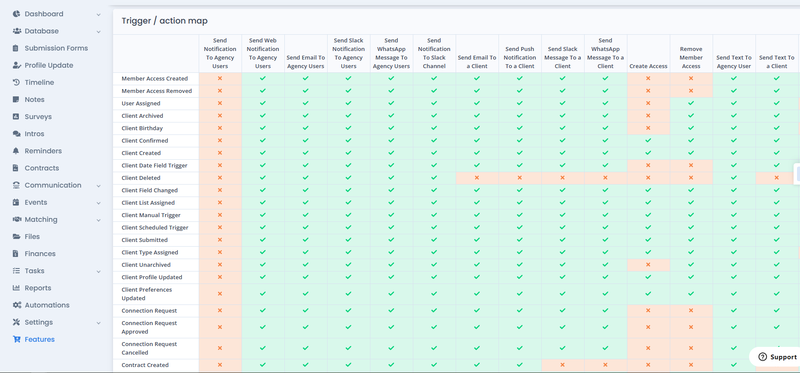
Ein Beispiel für eine Trigger/Aktion-Karte — Mitgliederlebenszyklusereignisse von Client Created bis Connection Request Approved, jeweils zuordenbar zu Aktionen über E-Mail, Slack, WhatsApp, SMS und Push-Benachrichtigungen, mit Hunderten von zusätzlichen Automatisierungskombinationen verfügbar. Mit freundlicher Genehmigung von SmartMatchApp
🡲 Vertiefung: Wie Sie Ihre täglichen Abläufe mit Aufgaben und Workflows in einem Vermittlungs-CRM automatisieren
Schritt 5: Feedback-Schleife und kontinuierliche Verbesserung
Die leistungsstärkste Funktion von AI-Vermittlung ist nicht das anfängliche Match — es ist das, was danach passiert.
Da Ergebnisdaten aus jeder Einführung gesammelt werden (Hat das Meeting stattgefunden? War die Verbindung wertvoll? Würden sie sich wieder treffen?), verfeinert das System sein Modell dessen, was ein erfolgreicher Match für diese spezifische Community ausmacht. Eine Organisation, die 500 Einführungen durchgeführt hat, hat eine grundlegend genauere Matching-Engine als eine, die 50 durchgeführt hat — weil der Algorithmus aus 500 realen Ergebnissen gelernt hat, nicht nur aus 500 angegebenen Präferenzen.
Dies ist, was AI-Vermittlung von regelbasiertem Filtern unterscheidet: Das System wird mit der Nutzung genauer.
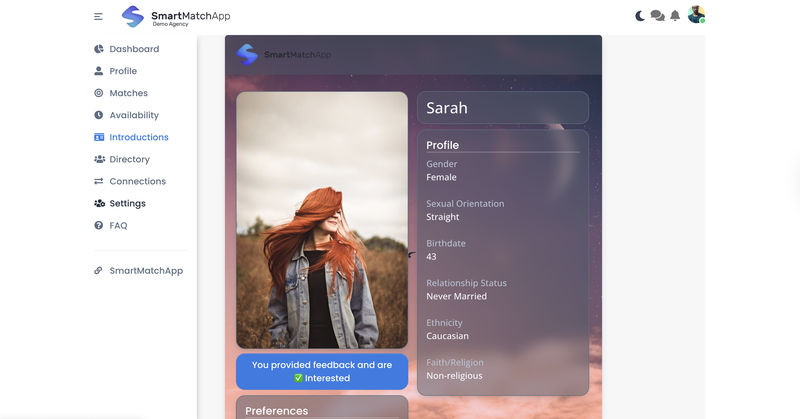
Ein kundenorientiertes Einführungsportal, das eine abgeschlossene Feedback-Interaktion zeigt — das Mitglied hat das Match-Profil überprüft und Interesse bestätigt, und dieses Ergebnis in den Matching-Algorithmus zurückgespeist, um die zukünftige Kompatibilitätsbewertung zu verbessern. Mit freundlicher Genehmigung von SmartMatchApp
4. Wer sollte AI-Vermittlungssoftware nutzen?
AI-Vermittlungssoftware ist für jede Organisation konzipiert, deren Kernwert davon abhängt, Menschen mit einem Zweck zu verbinden. Wenn eine bedeutungsvolle Einführung zentral für das ist, was Sie liefern, ist Vermittlungssoftware Infrastruktur — kein Feature.
Sie ist gebaut für:
- Partnervermittlungs- und Heiratsagenturen, die Kunden basierend auf Kompatibilität, Lebensstil und Beziehungszielen verbinden
- Berufsverbände und Mitgliederorganisationen, die Peer-to-Peer-Wert über Newsletter und Konferenzen hinaus fördern
- Veranstalter und Konferenzplattformen, die passive Teilnehmer in aktive, vernetzte Teilnehmer verwandeln
- Netzwerk- und Business-Communities, in denen der Mitgliedswert davon abhängt, wen man trifft
- Mentoring- und Coaching-Programme, die Erfahrungsstufen, Fähigkeiten und Ziele zwischen Mentoren und Mentees abgleichen
- Investor-Startup-Ökosysteme, die Kapital mit Chancen basierend auf Übereinstimmung der Anlagethese, Phase und Sektor verbinden
- Non-Profit-Organisationen und Peer-Support-Communities, die Verbindungen zwischen Freiwilligen, Spendern und denjenigen, denen sie dienen, fördern
Ein praktischer Benchmark: Wenn Ihre Organisation Menschen für mission-kritische Ergebnisse verbindet — Karrierefortschritt, Investitionen, persönliches Wachstum oder Lebensentscheidungen — bestimmen die Qualität und Geschwindigkeit Ihrer Einführungen direkt Ihre Bindung, Empfehlungen und Einnahmen.
Hier ist, was die Forschung speziell über jede dieser Branchen sagt.
5. Schlüsselindustrien, die Vermittlungssoftware nutzen — und was die Forschung sagt
Partnervermittlungs- und Heiratsagenturen
Der globale Markt für Vermittlungsdienste wurde im Jahr 2024 auf 4,37 Milliarden USD geschätzt und soll bis 2035 10 Milliarden USD erreichen bei einer CAGR von 7,8%, wobei AI und maschinelles Lernen die Hauptwachstumstreiber sind. Im Februar 2025 führte eHarmony eine spezielle AI-Kompatibilitätsbewertungsfunktion ein, um Fehlvermittlungsraten zu reduzieren. Für professionelle Vermittler übersetzt sich dieser technologische Vorteil direkt in Kundenergebnisse: schnellere Matches, weniger Sackgassen, stärkere Empfehlungen.
Berufsverbände
Der 2026 iMIS Benchmark Report ergab, dass Mitgliederengagement das vierte Jahr in Folge das oberste Organisationsziel war und dass Organisationen mit einfachem Zugang zu Engagement-Daten signifikant häufiger von Engagement-Gewinnen berichten. Für Berufsverbände ist das wertvollste, was sie einem Mitglied anbieten können, keine Newsletter oder Konferenz — es ist eine Einführung zum richtigen Peer, Kunden oder Kollaborateur. Genau das macht Vermittlungssoftware möglich, in jedem Maßstab.
Mentoring-Programme
AI-Mentor-Matching — Analyse von Fähigkeiten, Zielen, Interessen und Karriereaspirationen — führt zu stärkeren Beziehungen, höherem Engagement und messbaren Verbesserungen in Ergebnissen wie beruflicher Entwicklung, Bindung und studentischem Erfolg. Die häufigste Ursache für das Scheitern von Mentoring-Programmen ist nicht ein Mangel an willigen Teilnehmern; es ist eine schlechte anfängliche Zuordnung. Zufällige oder bequemlichkeitsbasierte Paarungen führen zu unangenehmen ersten Gesprächen, abgesagten Meetings und stillem Ausstieg. Algorithmisches Matching ändert dieses Ergebnis in jeder Phase.
Veranstaltungen und Konferenzen
AI-Vermittlung bei Veranstaltungen verwandelt passives Networking in strukturierte, intentionale Verbindungen. Plattformen, die absichtsbasierte AI-Vermittlung nutzen, berichten von bis zu 18% Steigerungen bei der Teilnehmerbindung, mit messbaren Verbesserungen bei qualifizierten Meetings und Teilnehmerzufriedenheit — Faktoren, die direkt den ROI von Sponsoren und die Erneuerungsraten von Veranstaltungen beeinflussen.
Investor-Startup-Ökosysteme
Für Investitionsgemeinschaften verwandelt Vermittlungssoftware einen beziehungsgetriebenen, undurchsichtigen Prozess in einen strukturierten und skalierbaren. Das Erfassen von Anlagethese, Präferenz für die Phase, Sektorfokus und geografischen Kriterien — und das Abgleichen dieser mit Startup-Profilen — erhöht die Relevanz jeder gemachten Einführung erheblich.
Peer-Support, Gesundheitswesen und Non-Profit-Organisationen
Eine 2025 veröffentlichte Studie in Biomimetics untersuchte algorithmisches Peer-Matching in Online-Support-Communities und stellte fest, dass strukturiertes AI-Matching die mittlere Wartezeit auf eine hilfreiche Antwort um 76% reduzierte im Vergleich zu zufälligem Routing, mit signifikant höheren wahrgenommenen Hilfsbewertungen von Teilnehmern. Im Gesundheitswesen verbessert das Matching nach Zustand, Behandlungsphase und Kommunikationspräferenz sowohl die Teilnahmequoten als auch das klinische Vertrauen.
6. Vorteile von AI-Vermittlungssoftware
Erhöhtes Mitgliederengagement
Mitglieder, die relevante, personalisierte Einführungen erhalten, nehmen mehr teil — weil die Teilnahme echten Wert liefert anstatt generischen Inhalts. SmartMatchApp-Kunden haben von Engagementsteigerungen von bis zu 700% nach der Implementierung strukturierter AI-Vermittlungs-Workflows berichtet.
Höhere Bindung durch schnellere Time-to-Value
Der 2026 iMIS Benchmark Report ergab, dass 45% der Mitgliederorganisationen in diesem Jahr die Bindungsraten erhöhten — aber die Lücke ist durchweg am größten im ersten Jahr, bevor Mitglieder genug Wert erfahren haben, um eine Erneuerung zu rechtfertigen. AI-Vermittlung komprimiert die Time-to-Value: Neue Mitglieder werden gematcht und eingeführt, bevor die Abkopplung einsetzt. Forschung von Frederick Reichheld von Bain & Company zeigt, dass eine 5%ige Erhöhung der Bindung die Gewinne um 25% bis 95% steigern kann — was das frühe Matching zu einer der höchsten ROI-Investitionen macht, die eine Organisation tätigen kann.
Höherwertige Verbindungen
Eine schlecht gematchte Einführung ist schlimmer als keine Einführung — sie verschwendet Zeit, untergräbt Vertrauen und schädigt den wahrgenommenen Wert der Plattform. Kompatibilitätsbewertung über mehrere Dimensionen gleichzeitig bedeutet, dass Einführungen für beide Parteien wirklich relevant sind, nicht nur bequem für den Betreiber.
Zeitersparnis durch Automatisierung
Jede geschriebene E-Mail, jedes überprüfte Profil, jedes manuell gesendete Follow-up ist eine Wachstumsbeschränkung. Organisationen, die fortschrittliche Vermittlungsautomatisierung nutzen, sparen durchschnittlich 50+ Stunden pro Woche bei administrativen Aufgaben — Zeit, die direkt in Beziehungsmanagement und Community-Aufbau zurückfließt.
Wachstum, das mit der Plattform skaliert
Ohne Vermittlungssoftware erzeugt Wachstum operativen Overhead. Mehr Mitglieder bedeuten mehr Profile, mehr Koordination, mehr Follow-ups — alles manuell. Mit Vermittlungssoftware wird das Wachstum von der Plattform absorbiert. Onboarding, Matching und Follow-up skalieren ohne zusätzliche Mitarbeiter.
Aktivierung bestehender Mitgliedsdaten
Die meisten Organisationen sitzen auf ihrem wertvollsten Vermögenswert, ohne zu wissen, wie sie ihn nutzen können: ihre Mitgliedsdaten. AI-Vermittlung verwandelt Profile von einer Aufzeichnungsübung in eine fortlaufende, sich selbst verbessernde Matching-Engine — eine, die Verbindungen aufdeckt, die kein menschlicher Prüfer in großem Maßstab identifizieren würde.
7. Ergebnisse aus der Praxis
NLBWA (National Latina Business Women's Association): In den ersten fünf Jahren hat NLBWA Anbieter und Käufer manuell auf Papier gematcht. Nach der Implementierung der Business-Vermittlungsplattform von SmartMatchApp stieg die Anzahl der Termine beim jährlichen Latina BizCon von 20 auf 45 und dann auf 100 im folgenden Jahr — ein 5-facher Anstieg qualifizierter Verbindungen bei derselben Veranstaltung. Walk-in-Teilnehmer wurden vor Ort gematcht, was in Echtzeit zusätzliche 30 hochpräzise Termine generierte.
TBLI Group (globales Impact-Investing-Netzwerk): Wechselte von manuellen Profilüberprüfungen zu algorithmischem Matching basierend auf Investitionskriterien. Ergebnis: 146% Anstieg der Verbindungen und 3-facher Dealflow.
Blockchain Game Alliance: Implementierte AI-gestütztes Matching in ihrer Community und generierte 1.000+ neue Mitgliederverbindungen, was das langfristige Engagement in großem Maßstab erhöhte.
Group Social: Kombinierte AI-Vermittlung mit Workflow-Automatisierung, um auf 20.000+ Mitglieder in 18 Monaten zu skalieren, wobei während des schnellen Wachstums ein starkes Engagement aufrechterhalten wurde.
🡲 Für einen Schritt-für-Schritt-Blick darauf, wie diese Ergebnisse umgesetzt wurden, siehe: Wie Communities das Engagement mit AI-Vermittlungssoftware steigern (5 bewährte Schritte)
Häufig gestellte Fragen
Dieses Video beantwortet die acht häufigsten Fragen, die professionelle Vermittler stellen, bevor sie ein Vermittlungs-CRM wählen — von Datensicherheit und Anpassung bis hin zu Preisen, Migration und Einstieg.

Was ist AI-Vermittlungssoftware? AI-Vermittlungssoftware ist eine Plattform, die strukturierte Mitgliedsdaten und Algorithmen verwendet, um Menschen basierend auf Kompatibilität, gemeinsamen Zielen und definierten Präferenzen zu verbinden. Im Gegensatz zu CRM- oder Community-Tools berechnet sie Kompatibilitätswerte über mehrere Dimensionen, automatisiert Einführungen und verfeinert ihre Matching-Genauigkeit basierend auf realem Ergebnis-Feedback — was sie speziell für Organisationen macht, deren Wert davon abhängt, Menschen zu verbinden.
Wie funktioniert AI-Vermittlungssoftware? Sie folgt einem fünfstufigen Workflow: strukturierte Profildatenerfassung, multidimensionale Kompatibilitätsbewertung mit AI-Match-Zusammenfassungen, Ein-Klick-automatisierte Einführungen, vollständige Lebenszyklus-Workflow-Automatisierung und eine Feedback-Lernschleife, die die Matching-Genauigkeit kontinuierlich basierend auf realen Ergebnissen verbessert. Das System wird mit der Nutzung genauer.
Wer sollte AI-Vermittlungssoftware nutzen? Jede Organisation, die Menschen für mission-kritische Ergebnisse verbindet: Partnervermittlungsagenturen, Berufsverbände, Mentoring-Programme, Investornetzwerke, Konferenzveranstalter, Non-Profit-Organisationen und Peer-Support-Communities. Wenn eine bedeutungsvolle Einführung zentral für Ihr Wertversprechen ist, ist Vermittlungssoftware Infrastruktur — kein Nice-to-have.
Wie anpassbar ist eine Vermittlungsplattform? Moderne Vermittlungsplattformen bieten vollständige Anpassung über alle Vertikalen hinweg. Jedes Matching-Feld, Präferenzkriterium, Einführungsvorlage, Aufnahmeformular und Automatisierungsauslöser kann auf Ihren genauen Anwendungsfall konfiguriert werden — egal, ob Sie ein einzelner Partnervermittler sind, der 50 Profile verwaltet, oder ein globaler Verband, der Zehntausende von Mitgliedern verwaltet.
Kann Vermittlungssoftware mit anderen Tools integriert werden? Ja. Führende Vermittlungsplattformen integrieren sich mit Twilio, Stripe, Gmail, Slack, Zoom und 2.000+ Apps über Zapier. Das Ziel ist ein einziges verbundenes Ökosystem — kein weiteres Tool, das Ihr Team manuell mit allem anderen synchronisieren muss.
Wie schwierig ist es, bestehende Daten auf eine Vermittlungsplattform zu migrieren? Speziell entwickelte Vermittlungsplattformen führen routinemäßig Migrationen von Excel, anderen CRMs und Legacy-Datenbanken durch. Profile, Fotos, Präferenzdaten und Beziehungshistorie können alle übertragen werden, sodass Sie sofort mit dem Matching beginnen können, ohne Ihre historische Datenbasis zu verlieren.
Ist Vermittlungssoftware sicher? Führende Plattformen verfügen über SOC 2 Typ 2 Compliance-Zertifizierung neben GDPR, EU-US Privacy Shield, PIPEDA-Compliance und HIPAA-Adequacy. Mitgliedsdaten werden Ende-zu-Ende verschlüsselt, redundant gesichert und niemals an Dritte weitergegeben oder für Marketingzwecke verwendet.
Was unterscheidet AI-Vermittlung von einfacher Suche oder Filterung? Einfache Filterung gibt Profile zurück, die eine Reihe von Kriterien erfüllen. AI-Vermittlung bewertet Kandidaten nach Kompatibilität über mehrere gewichtete Dimensionen, generiert natürliche Sprachbeschreibungen, warum zwei Personen kompatibel sind, und verfeinert kontinuierlich Vorschläge basierend auf vergangenen Einführungsergebnissen. Es ist ein lernendes System — kein statischer Filter — und wird mit jedem Zyklus genauer.
Fazit: Die Verbindungsschicht, die Ihrer Organisation fehlt
Die Kluft zwischen den Daten, die Organisationen besitzen, und dem Wert, den sie den Mitgliedern liefern, ist kein Strategieproblem. Es ist ein Werkzeugproblem.
AI-Vermittlungssoftware schließt diese Lücke — indem sie Mitgliederprofile in bewertete Kompatibilitätsvorschläge verwandelt, Vorschläge in Ein-Klick-Einführungen und Einführungen in ein sich selbst verbesserndes System, das im Laufe der Zeit an Wert gewinnt.
Egal, ob Sie eine Partnervermittlungsagentur, einen Berufsverband, ein Mentoring-Programm oder ein Investornetzwerk betreiben, die Chance ist dieselbe: Hören Sie auf, Einführungen als manuellen, ad-hoc-Prozess zu behandeln, und beginnen Sie, sie als skalierbares, datengetriebenes System zu betrachten.
Die Organisationen, die diesen Wandel vollzogen haben, gehen nicht zurück.
Nächster Schritt
SmartMatchApp bietet eine umfassende AI-Vermittlungslösung zur Verwaltung von Mitgliedsdaten, Automatisierung von Einführungen und Skalierung des Engagements in jeder Branche.
👉 Buchen Sie eine Demo, um zu sehen, wie es in Ihrem spezifischen Anwendungsfall funktioniert.
